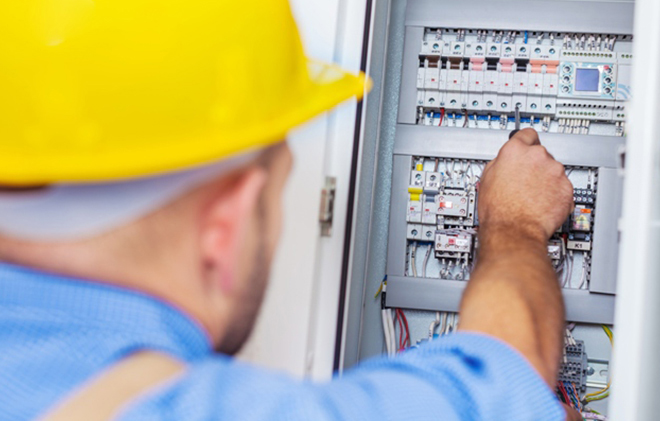
The DIY Culture Has Its Place But Not Here
There is something genuinely satisfying about handling things yourself. Painting a room, assembling furniture, landscaping a backyard, and patching drywall are the kinds of projects where a motivated homeowner with a free weekend and a YouTube tutorial can get real results. The DIY spirit is alive and well in Palm Beach County, and for good reason. It saves money, builds skills, and creates a sense of ownership over your home that no contractor can replicate.
But there is one domain where that spirit runs directly into a wall, and that wall is made of volts, amps, and the very real possibility of fire, electrocution, or a failed home inspection. Electrical work is categorically different from other home improvement projects, and Palm Beach County residents who understand this distinction consistently make the same choice: they call a licensed electrician.
This is not about lacking confidence or capability. It is about understanding what is actually at stake and making the decision that protects your home, your family, your finances, and your investment in one of Florida’s most desirable real estate markets.
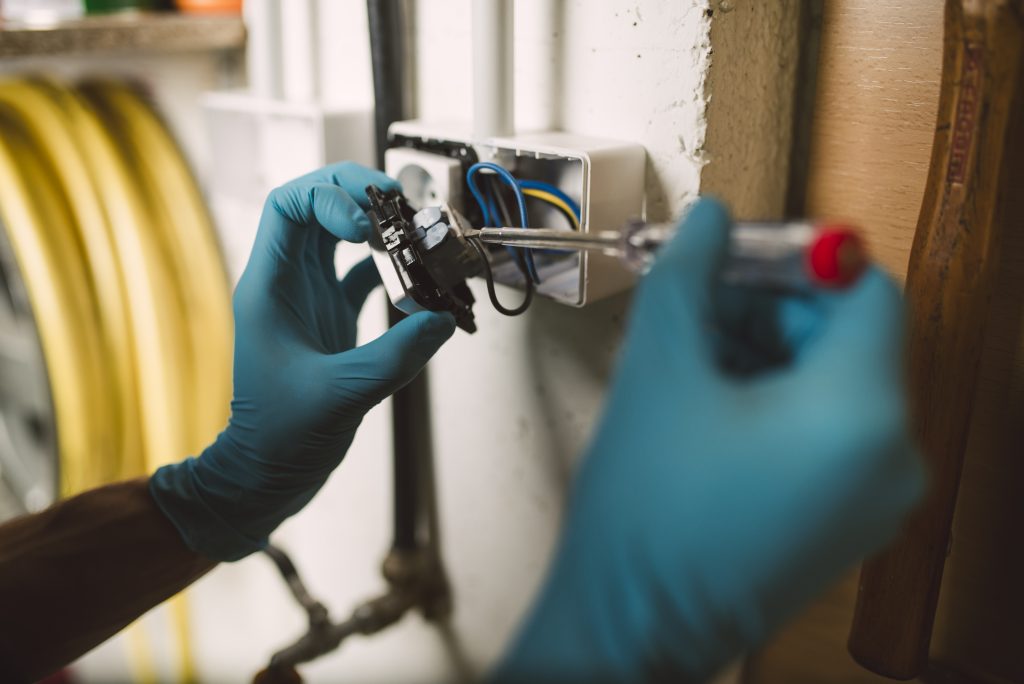
Palm Beach County’s Unique Electrical Environment
Before diving into the specifics of why licensed electrical work matters so much, it is worth understanding what makes Palm Beach County’s electrical environment particularly demanding.
A Climate That Tests Every System
South Florida’s climate is not gentle on residential and commercial electrical systems. The combination of intense heat, high humidity, frequent thunderstorms, and salt air creates conditions that accelerate wear on wiring, connections, outlets, and panels faster than almost anywhere else in the country.
Humidity penetrates electrical boxes and conduit, promoting corrosion on connections and terminals. Salt air, especially in oceanfront and Intracoastal communities from Palm Beach and Gulf Stream to Juno Beach and Palm Beach Shores, aggressively corrodes copper wiring, panel components, and fixture hardware. The intense Florida sun degrades exterior wiring insulation and outdoor electrical components far more quickly than in cooler, drier climates.
Meanwhile, Palm Beach County’s thunderstorm season produces some of the highest lightning strike densities in the United States. Florida is consistently ranked as the lightning capital of the country, and Palm Beach County properties absorb a disproportionate share of that electrical punishment. Surge damage, arc faults, and weather-related electrical failures are facts of life here, not occasional anomalies.
Understanding these local conditions is not something a DIY tutorial can teach. It is knowledge that licensed electricians working in this market develop through years of hands-on experience with the specific challenges Palm Beach County presents.
Rapid Growth and Aging Infrastructure
Palm Beach County has experienced explosive population growth over the past decade. Communities like West Palm Beach, Boynton Beach, Delray Beach, Boca Raton, Jupiter, and Wellington are seeing significant residential and commercial development, bringing new construction, major renovations, and a growing demand for electrical systems that can support modern power loads.
At the same time, a substantial portion of Palm Beach County’s housing stock was built in the 1970s, 1980s, and 1990s. These homes often carry electrical infrastructure that was adequate for the power demands of its era but is increasingly strained by today’s reality: larger appliances, home offices, electric vehicle chargers, smart home systems, whole-home generators, and the general proliferation of devices that modern households depend on.
The gap between what older electrical systems were designed to handle and what today’s homeowners actually need them to handle is one of the most common sources of electrical problems and one of the most compelling reasons professional assessment and upgrade work is so important throughout the county.
The Real Risks of DIY Electrical Work
People underestimate electrical risk because electricity is invisible. You cannot see current flowing through a wire the way you can see water leaking from a pipe or smoke rising from an overheating motor. This invisibility creates a false sense of security that leads homeowners to attempt work they should leave to licensed professionals.
Fire Risk
Electrical fires are one of the leading causes of residential house fires in the United States. The majority of them originate not from dramatic failures but from subtle problems: a loose wire connection that arcs intermittently over months before igniting adjacent insulation, an improperly sized circuit breaker that fails to trip when overloaded, wiring routed too close to insulation in an attic, or an outlet box installed without proper fire-stop protection in a wall cavity.
These are the kinds of mistakes that DIY electrical work commonly produces not from malicious negligence but from the honest gap between what a tutorial shows and what a licensed electrician knows from years of training and fieldwork. The problem is that these mistakes often go undetected for months or years before they cause a fire. By then, the original work is buried in a wall, the cause is difficult to trace, and the damage is devastating.
In Palm Beach County’s real estate market, where home values in communities like Boca Raton, Palm Beach Gardens, and Wellington regularly exceed seven figures, the financial consequences of an electrical fire are catastrophic. No amount of DIY savings justifies that risk.
Electrocution and Personal Injury
The second major risk of DIY electrical work is the most immediate: electrocution. Household current at 120 volts is sufficient to cause cardiac arrest. At 240 volts, the level used by dryers, ranges, HVAC systems, and EV chargers, the danger is even more severe. Most electrocution accidents occur not because the homeowner was careless but because they did not know what they did not know.
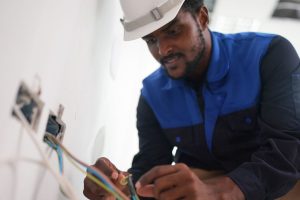
De-energizing a circuit at the breaker panel does not guarantee that all wires in a given box are safe to handle. Multi-wire branch circuits, shared neutrals, feed-through wiring, and improperly labeled panels create situations where voltage is present in locations a non-professional would not anticipate. Licensed electricians are trained to test and verify before they touch a discipline that comes from professional training, not YouTube.
Insurance and Liability Consequences
Homeowner’s insurance policies in Florida typically include language that excludes coverage for damage caused by unpermitted work or work performed by unlicensed individuals. If a DIY electrical project causes a fire or other damage and the insurer determines the work was performed without proper permits or by an unlicensed person, the claim can be denied entirely.
In Palm Beach County’s competitive and high-value real estate market, this exposure is particularly significant. A denied insurance claim following an electrical fire could mean bearing the full cost of rebuilding a home out of pocket, an outcome that no amount of DIY savings could ever offset.
What Florida Law Actually Requires
Florida law is unambiguous on this point: most residential electrical work requires both a licensed electrical contractor and a permit. The Florida Building Code and Palm Beach County’s local amendments specify what work requires permitting and who is legally authorized to perform it.
A licensed electrical contractor in Florida holds either an EC (Electrical Contractor) or ER (Electrical Residential) license issued by the Florida Department of Business and Professional Regulation. These licenses require passing rigorous exams, demonstrating practical experience, carrying liability insurance and workers’ compensation coverage, and completing continuing education requirements.
The permit process exists for a reason. When electrical work is permitted, it is inspected by a county inspector who verifies that the work meets code requirements before it is concealed in walls or put into service. This inspection step is a critical safety check that unpermitted DIY work bypasses entirely.
For Palm Beach County property owners, the consequences of unpermitted electrical work extend beyond safety. Unpermitted work discovered during a home sale, which title searches and buyer inspections regularly surface, can delay or kill transactions, require expensive remediation, and create legal liability for the seller. The savings from DIY work can evaporate instantly when it becomes a real estate disclosure issue years later.
The Services That Require a Licensed Electrician
Understanding which electrical services genuinely require a licensed professional helps Palm Beach County homeowners make informed decisions. The honest answer is: most of them.
Electrical Panel Replacements and Upgrades
The electrical panel is the heart of a home’s power distribution system. It receives power from the utility, divides it into individual circuits, and provides the overcurrent protection that prevents wiring from overheating and causing fires. As homes age and power demands grow, panel upgrades become necessary, and they are among the most technically demanding and consequential electrical jobs performed in a residence.
Panel work involves direct connection to utility service conductors that remain energized even when the main breaker is off. It requires a precise understanding of load calculations, breaker sizing, grounding and bonding requirements, and current Florida Building Code specifications. It is work that licensed electricians perform routinely and that homeowners should never attempt.
In Palm Beach County, panel upgrades are particularly common in homes built before the 1990s, many of which still contain original 100-amp or even 60-amp service that is woefully inadequate for modern loads. Upgrading to a 200-amp or 400-amp service panel is one of the most valuable electrical investments a property owner can make, both for safety and for home value.
Whole-Home Surge Protection
Florida’s lightning exposure makes whole-home surge protection not a luxury but a necessity for Palm Beach County property owners. A properly installed surge protection device at the main panel diverts voltage spikes before they can travel through branch circuits and damage sensitive electronics, appliances, HVAC systems, smart home devices, and EV charging equipment.
Surge protection installation requires working inside the panel and properly bonding the device to the grounding system, work that must be performed by a licensed electrician to be done safely and effectively, and to qualify for any applicable warranty coverage.
Lighting Installation and Repair
From recessed lighting in new construction to outdoor landscape and security lighting, from chandelier installation in a Manalapan estate to commercial lighting upgrades in a Boca Raton office, lighting work spans a wide range of complexity. Even seemingly simple jobs like adding a new light fixture or installing dimmer switches involve wiring connections, box capacity calculations, and compatibility considerations that can go wrong in ways that create fire risk or code violations.
Outdoor lighting in Palm Beach County’s coastal environment requires weatherproof and corrosion-resistant fixtures, proper wet-location rated wiring methods, and GFCI protection details that licensed electricians understand and enforce and that DIY installations routinely miss.
Ceiling Fan Installation
Ceiling fan installation seems straightforward until it is not. Fans require specific electrical boxes rated for their weight and motion, proper wiring for both fan and light kit controls, and, in many cases, new wiring runs if an existing fixture was not on a properly rated circuit. In older Palm Beach County homes, the existing ceiling box is often not rated for a fan, a detail that, if missed, can result in a fan pulling loose from the ceiling while in operation.
Water Heater Wiring
Electric water heaters operate on dedicated 240-volt circuits with specific amperage requirements. Wiring a water heater improperly, with the wrong wire gauge, an improperly sized breaker, and inadequate connections creates both fire risk and the possibility of premature appliance failure. In Florida’s high-demand hot water environment, a properly wired water heater is essential for both safety and efficiency.
EV Charger Installation
Electric vehicle adoption is accelerating across Palm Beach County as residents in communities from Wellington to Jupiter make the transition to electric transportation. Level 2 EV charger installation requires a dedicated 240-volt circuit, proper wire sizing for the charger’s amperage draw, and, in many cases, a panel assessment to ensure adequate capacity. It is permitted work that must be performed by a licensed electrician and inspected before the charger is put into service.
Troubleshooting and Electrical Repair
When something goes wrong with a home’s electrical system, repeated breaker trips, outlets that stop working, lights that flicker, burning smells from a panel or outlet, the underlying cause is rarely as simple as it appears. Electrical troubleshooting requires systematic diagnostic methodology, knowledge of how circuits are typically wired in different eras of construction, and the ability to identify problems that are not immediately visible.
Attempting to self-diagnose and repair electrical problems without this expertise risks missing the actual cause of the problem, creating new hazards in the process of attempting a fix, or masking a serious underlying issue that continues to develop unseen.
Why Licensed Electricians Deliver Better Outcomes
Beyond the safety and legal imperatives, there are practical reasons why professional electrical work consistently delivers better results than DIY attempts.
Code Compliance and Future-Proofing
Florida’s electrical code is updated on a regular cycle, and Palm Beach County adopts amendments that address local conditions and requirements. Licensed electricians are required to maintain current code knowledge as a condition of licensure. Work performed by licensed professionals meets current code, which protects homeowners during inspections, insurance claims, and real estate transactions.
Proper Tools and Testing Equipment
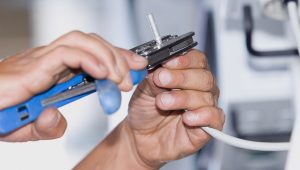
Professional electricians carry tools that most homeowners do not have and would not know how to use: clamp meters, thermal imaging cameras for identifying hot connections, circuit tracers, arc fault testers, and professional-grade voltage testers. This equipment enables accurate diagnosis and quality workmanship that goes beyond what hand tools and a multimeter can achieve.
Warranty and Accountability
Licensed electrical contractors carry liability insurance and are accountable to the Florida Department of Business and Professional Regulation. If something goes wrong with their work, there is a clear path to recourse. DIY work carries no such accountability; the homeowner bears full responsibility for any consequences.
Time and Efficiency
What a licensed electrician completes in two hours can consume an entire weekend for an inexperienced homeowner and still may not be done correctly. The value of professional efficiency in a market where homeowners’ time is valuable should not be underestimated.
Serving Every Community in Palm Beach County
Palm Beach County is one of Florida’s largest and most diverse counties, spanning more than 2,200 square miles and encompassing communities with dramatically different character and electrical needs. From the oceanfront estates of Palm Beach and Manalapan to the equestrian properties of Wellington, from the dense urban neighborhoods of West Palm Beach and Riviera Beach to the suburban communities of Boynton Beach, Delray Beach, Greenacres, and Royal Palm Beach, the county’s electrical service needs are as varied as its communities.
Effective electrical service in this market requires knowledge that goes beyond general competency. Understanding the specific construction styles, utility infrastructure, and local permit processes for individual municipalities within the county, from Atlantis and Boca Raton to Tequesta and Westlake, is the kind of local expertise that makes a genuine difference in service quality and project outcomes.
Communities along the Intracoastal and ocean Gulf Stream, Highland Beach, Ocean Ridge, Palm Beach Shores, and South Palm Beach require particular attention to corrosion-resistant materials and installation methods suited to salt air exposure. Inland agricultural and rural communities like Belle Glade, Pahokee, and Loxahatchee Groves present different challenges: older infrastructure, longer service runs, and utility configurations that differ from urban areas. A licensed electrician who knows this county knows these distinctions.
What to Expect From a Professional Electrical Service Experience
Choosing a licensed electrician in Palm Beach County should come with clear expectations about what professional service looks like.
Licensure verification. A legitimate electrical contractor will provide their Florida license number EC or ER without hesitation. You can verify any Florida electrical contractor license at the DBPR’s online portal in minutes. Never hire an electrician who cannot or will not provide their license number.
Permit pulling and inspection coordination. For work that requires permits, a professional contractor handles the permit application, schedules the inspection, and ensures the work passes. This is part of the service, not an optional add-on.
Clear, written estimates. Before work begins, a professional electrician provides a written scope of work and price. There should be no ambiguity about what is included and what is not.
Clean, professional job sites. Electrical work inevitably involves accessing walls, ceilings, and attic spaces. A professional crew respects your home, protects surfaces during work, and leaves the job site clean when they are done.
Responsive communication. From the initial call to project completion, professional electrical service means accessible, clear communication, including emergency availability for situations that cannot wait until Monday morning.
Conclusion
Electricity powers everything that makes a Palm Beach County home comfortable, functional, and safe. Protecting that system and the people and property it serves requires the expertise, licensure, and accountability that only a professional electrical contractor can provide.
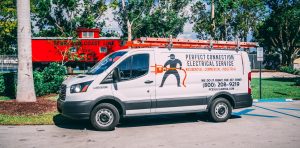
Perfect Connection Electrical Service has been delivering licensed, reliable, and expert electrical services to Palm Beach County homeowners and businesses for over a decade. From panel upgrades and surge protection to lighting installation, ceiling fan wiring, EV charger setup, and emergency repairs, Perfect Connection handles every job with the professionalism and precision this market demands. Serving communities throughout Palm Beach County from Boca Raton and Delray Beach to Jupiter, Wellington, and everywhere in between, Perfect Connection is the electrician Palm Beach County residents trust to get it right the first time.
Contact Perfect Connection Electrical Service today for a free estimate and experience the Perfect Connection difference.